

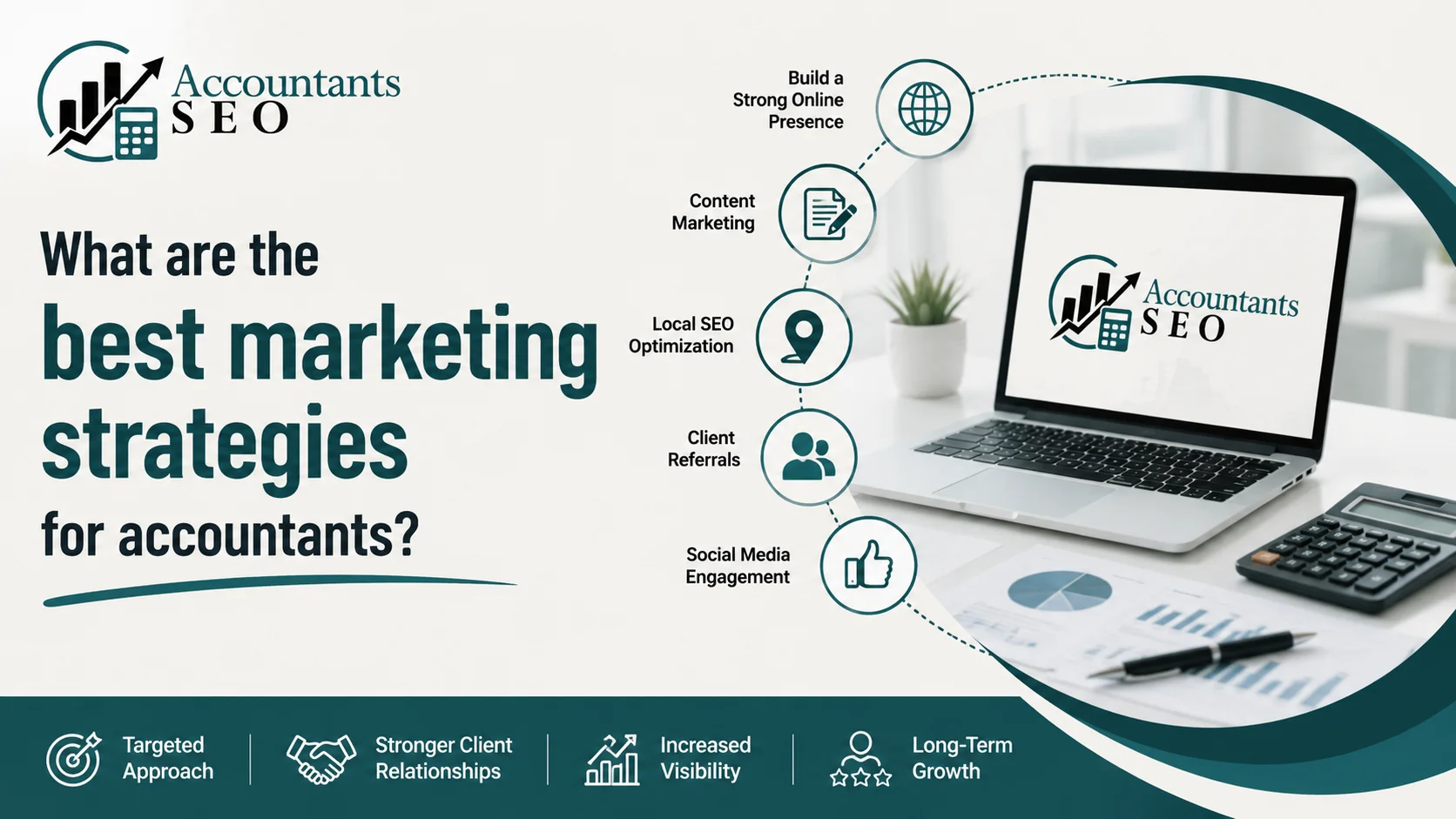
In today’s highly competitive digital landscape, accounting firms can no longer rely solely on word-of-mouth referrals to attract new clients. Whether you run a small bookkeeping business or a large accounting practice, implementing effective marketing strategies is essential for long-term growth and success. From search engine optimization (SEO) and content marketing to social media, email campaigns, and referral programs, the right marketing approach can help accountants build credibility, generate qualified leads, and increase client retention. This guide explores the best marketing strategies for accountants, helping you create a strong online presence and grow your accounting business in today’s evolving marketplace.
Why Marketing Matters for Modern Accounting Firms
The accounting industry has changed dramatically over the last few years. While referrals are still incredibly valuable, they are no longer enough to sustain consistent business growth. Today, business owners and individuals almost always search online before choosing an accountant. They compare websites, read online reviews, browse social media profiles, and even watch videos before deciding whom to trust with their finances.
This means accountants who rely solely on traditional networking risk losing clients to firms that have a stronger digital presence. Recent industry reports also show that businesses increasingly discover accountants through websites, search engines, and social media, while referrals continue to remain one of the highest-converting lead sources.
Marketing is no longer about aggressive selling. Instead, it is about demonstrating expertise, solving client problems, and building trust before a prospect ever schedules a consultation. When potential clients see helpful blog articles, informative videos, positive testimonials, and educational content, they begin viewing the accountant as a trusted advisor rather than simply another service provider. This shift has made content marketing, SEO, and relationship building essential parts of every successful accounting firm’s growth strategy.
The rise of artificial intelligence and online search has also changed how people consume information. Clients expect immediate answers, personalized experiences, and easy ways to contact businesses. A professional website, fast response times, educational resources, and consistent branding now influence purchasing decisions just as much as competitive pricing. Firms that embrace digital marketing are positioning themselves for sustainable long-term growth rather than relying on unpredictable word-of-mouth referrals alone.
Another important factor is competition. Thousands of accounting firms now compete in both local and national markets. Standing out requires more than simply listing your services. Successful firms communicate exactly who they help, what problems they solve, and why they are different. Instead of marketing to “everyone,” they specialize in serving industries such as healthcare, construction, e-commerce, real estate, or startups.
This focused positioning increases trust, improves search engine rankings, and ultimately generates higher-quality leads. Industry research consistently shows that firms with clear specialization often achieve stronger growth than generalist firms.
Define Your Ideal Accounting Niche
One of the biggest mistakes accountants make is trying to attract every possible client. While this approach may seem logical, it actually makes marketing less effective. People naturally trust specialists over generalists. Imagine you own a medical practice and need an accountant. Would you choose someone who serves every type of business, or someone who specializes in healthcare practices and understands industry-specific tax regulations? Most business owners prefer the specialist because expertise reduces perceived risk.
Choosing a niche also makes your marketing significantly easier. Your website content, blog posts, email newsletters, social media updates, and advertisements become much more targeted. Instead of writing generic tax advice, you can answer highly specific questions your ideal clients search for every day. This not only improves your SEO performance but also positions your firm as the obvious solution for that audience.
Popular accounting niches include real estate investors, dentists, medical clinics, law firms, e-commerce businesses, restaurants, construction companies, freelancers, startups, nonprofit organizations, and high-net-worth individuals. Each market has unique financial challenges that create opportunities for specialized accounting services. By becoming known as the expert in one niche, you reduce competition while increasing the value clients place on your expertise.
Niche specialization also improves referrals. Existing clients are much more likely to recommend your services when they know exactly who you help. Instead of saying, “I know a good accountant,” they can confidently say, “I know an accountant who specializes in e-commerce businesses,” making the referral much more relevant and persuasive. Multiple industry reports highlight specialization as one of the strongest long-term growth strategies for accounting firms because it supports higher pricing, stronger client loyalty, and improved marketing efficiency.
Develop a High-Converting Website
Your website is often the first impression potential clients have of your accounting firm. Think of it as your digital office—it should be clean, welcoming, professional, and easy to navigate. Visitors typically decide within a few seconds whether they trust a business enough to continue browsing. If your website looks outdated, loads slowly, or makes it difficult to find information, many prospects will leave before contacting you. A modern accounting website should clearly explain your services, highlight your expertise, display client testimonials, and include strong calls to action such as “Book a Free Consultation” or “Schedule a Discovery Call.” Mobile responsiveness is equally important because more than half of website traffic now comes from smartphones and tablets.
A high-performing website should also answer the questions potential clients commonly ask before they contact an accountant. Include dedicated pages for tax preparation, bookkeeping, payroll, business advisory services, financial planning, and industry-specific accounting if applicable. Publish a detailed About page that introduces your team and demonstrates your qualifications. Display certifications, years of experience, awards, and client success stories to establish credibility. Adding trust signals such as secure website certificates, privacy policies, and professional association memberships helps reassure visitors that they’re working with a reliable accounting firm. Fast loading speeds, clear navigation, and simple contact forms significantly improve conversion rates while reducing bounce rates.
Essential Website Features
Every successful accounting website should include several essential features that encourage visitors to become clients. These include:
| Website Feature | Why It Matters |
| Mobile-Friendly Design | Improves user experience on all devices |
| Fast Loading Speed | Reduces visitor abandonment |
| Online Appointment Booking | Makes scheduling simple |
| Service Pages | Helps Google understand your expertise |
| Client Testimonials | Builds trust and credibility |
| Contact Forms | Generates qualified leads |
| FAQ Section | Answers common questions before inquiries |
| Blog | Supports SEO and demonstrates expertise |
Adding live chat or AI-powered chat assistants can also improve engagement by answering basic questions instantly. Many visitors simply want to know pricing, available services, or whether you work with businesses like theirs. Quick responses often determine whether they contact your firm or continue searching elsewhere.
Conversion Optimization Tips
Driving traffic to your website is only half the battle. The real goal is converting visitors into paying clients. Every page should have one clear objective rather than overwhelming users with multiple choices. Strong headlines, professional imagery, concise service descriptions, and visible contact information all encourage action. Calls-to-action should appear naturally throughout each page rather than only at the bottom. For example, after explaining your bookkeeping services, immediately invite visitors to schedule a consultation instead of making them search for a contact page.
Social proof is another powerful conversion tool. Showcase positive Google reviews, client testimonials, case studies, and measurable results whenever possible. If your firm helped clients reduce tax liabilities, improve cash flow, or streamline accounting processes, highlight these achievements with permission. People trust the experiences of other customers far more than marketing claims alone. Small improvements such as simplifying contact forms, adding click-to-call buttons, and offering downloadable tax guides can dramatically increase lead generation without increasing advertising costs.
Invest in SEO for Long-Term Growth
Search Engine Optimization (SEO) remains one of the most cost-effective marketing strategies for accountants because it attracts people actively searching for accounting services. Unlike paid advertising, SEO continues delivering results long after content is published. When someone searches phrases like “small business accountant near me,” “tax accountant for freelancers,” or “bookkeeping services,” your goal is to appear on the first page of Google. Research consistently shows that websites ranking in the top three positions receive the majority of search traffic, making SEO an essential long-term investment.
Effective SEO begins with keyword research. Instead of targeting only broad keywords such as “accountant,” focus on long-tail keywords that reflect specific client needs. Examples include “tax accountant for contractors,” “cloud accounting services,” “VAT accountant,” or “corporate tax advisor.” Create individual pages optimized around these keywords while maintaining natural, reader-friendly writing. Google increasingly rewards helpful, authoritative content that genuinely answers user questions instead of pages stuffed with keywords. Publishing comprehensive guides, tax tips, financial planning articles, and business advice demonstrates expertise while improving search visibility over time.
Local SEO
For most accounting firms, local SEO delivers the highest return on investment. Since clients typically prefer accountants located nearby, optimizing your local presence helps you appear in Google Maps and local search results. Start by claiming and optimizing your Google Business Profile with accurate contact information, business hours, professional photos, and a complete description of your services.
Encourage satisfied clients to leave positive reviews because review quality and quantity significantly influence local rankings. Respond professionally to every review, whether positive or negative, to demonstrate excellent customer service.
Consistency is equally important. Ensure your business name, address, and phone number remain identical across your website, directories, and social media profiles. Build local citations on trusted business directories and seek backlinks from local organizations, chambers of commerce, and business associations. Publishing locally relevant blog posts such as tax updates affecting businesses in your region—can also improve your local authority while attracting nearby prospects searching for timely financial advice.
Content SEO
Content is the engine that powers successful SEO campaigns. Every article you publish creates another opportunity for potential clients to discover your firm through search engines. Focus on answering real questions that your audience asks, such as “How can small businesses reduce tax liability?”, “When should I hire an accountant?”, or “What bookkeeping mistakes should startups avoid?” Comprehensive content that thoroughly addresses these questions is far more likely to rank than short, generic articles.
Update existing content regularly to reflect changing tax laws, accounting regulations, and financial trends. Fresh, accurate information signals relevance to search engines while providing genuine value to readers. Internal linking between related articles also helps search engines understand your website structure and encourages visitors to spend more time exploring your expertise.
Over time, a library of high-quality educational content becomes one of your firm’s strongest marketing assets, attracting organic traffic and building long-term authority in the accounting industry.
FAQs
1. What is the best marketing strategy for accountants?
The best marketing strategy for accountants combines SEO, content marketing, local SEO, Google Business Profile optimization, social media marketing, email marketing, and client referrals. Using multiple channels together creates a steady flow of qualified leads and helps build long-term trust with potential clients.
2. How can accountants get more clients online?
Accountants can attract more clients online by creating an optimized website, publishing informative blog posts, ranking for relevant keywords, collecting positive Google reviews, using LinkedIn for networking, and running targeted Google Ads campaigns. Providing valuable educational content also establishes authority and encourages inquiries.
3. Is SEO worth it for accounting firms?
Yes. SEO is one of the highest ROI marketing strategies for accounting firms because it helps your website appear in search results when potential clients are actively looking for accounting or tax services. Unlike paid advertising, SEO continues generating traffic and leads over the long term.
4. Which social media platform is best for accountants?
LinkedIn is generally the most effective platform for accountants because it connects professionals, business owners, and decision-makers. Facebook can also be valuable for local engagement, while YouTube is excellent for sharing educational financial content and building credibility.
5. Why is content marketing important for accountants?
Content marketing helps accountants demonstrate expertise, answer common financial questions, improve search engine rankings, and build trust with potential clients. High-quality blogs, videos, guides, and tax tips educate prospects while positioning your firm as a reliable industry expert.